Transmission, late responses & reflexes

Neuromuscular & specialized electrodiagnostics.

Focused electrophysiologic methods for specific neuromuscular and neuroanatomical questions.

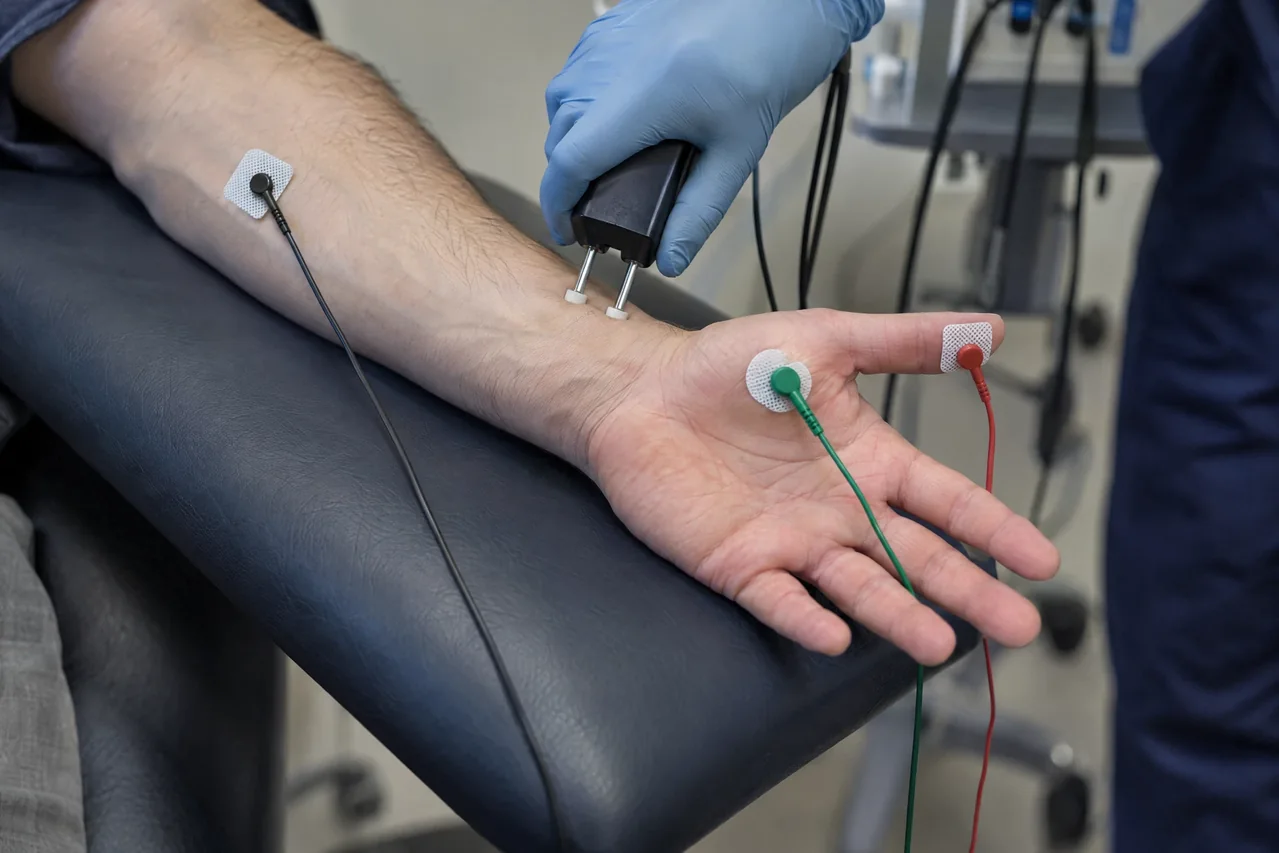
Illustrative median motor nerve conduction setup with thenar recording electrode, thumb reference, forearm ground and wrist stimulation.
Peripheral electrodiagnostic setup · Original AI-generated illustrative image

Distinct pathways. Focused questions.

Neuromuscular transmission, proximal motor conduction and reflex circuitry require different acquisition methods. Repetitive nerve stimulation examines successive evoked motor responses; F-wave studies sample late motor responses after supramaximal stimulation.

The H-reflex evaluates selected afferent–spinal–efferent physiology, while blink reflex testing examines trigeminal–facial pathways and associated brainstem circuits. Protocol selection and clinical significance depend on the broader evaluation, not a single waveform or parameter.

Illustrative median motor nerve conduction setup with thenar recording electrode, thumb reference, forearm ground and wrist stimulation.
RNS

Repetitive nerve stimulation

Repetitive nerve stimulation (RNS) is an electrodiagnostic study of neuromuscular transmission. Repeated electrical stimuli are delivered to a motor nerve while the compound muscle response is recorded. Findings may support, but never independently establish, a clinical diagnosis.

Explore the study
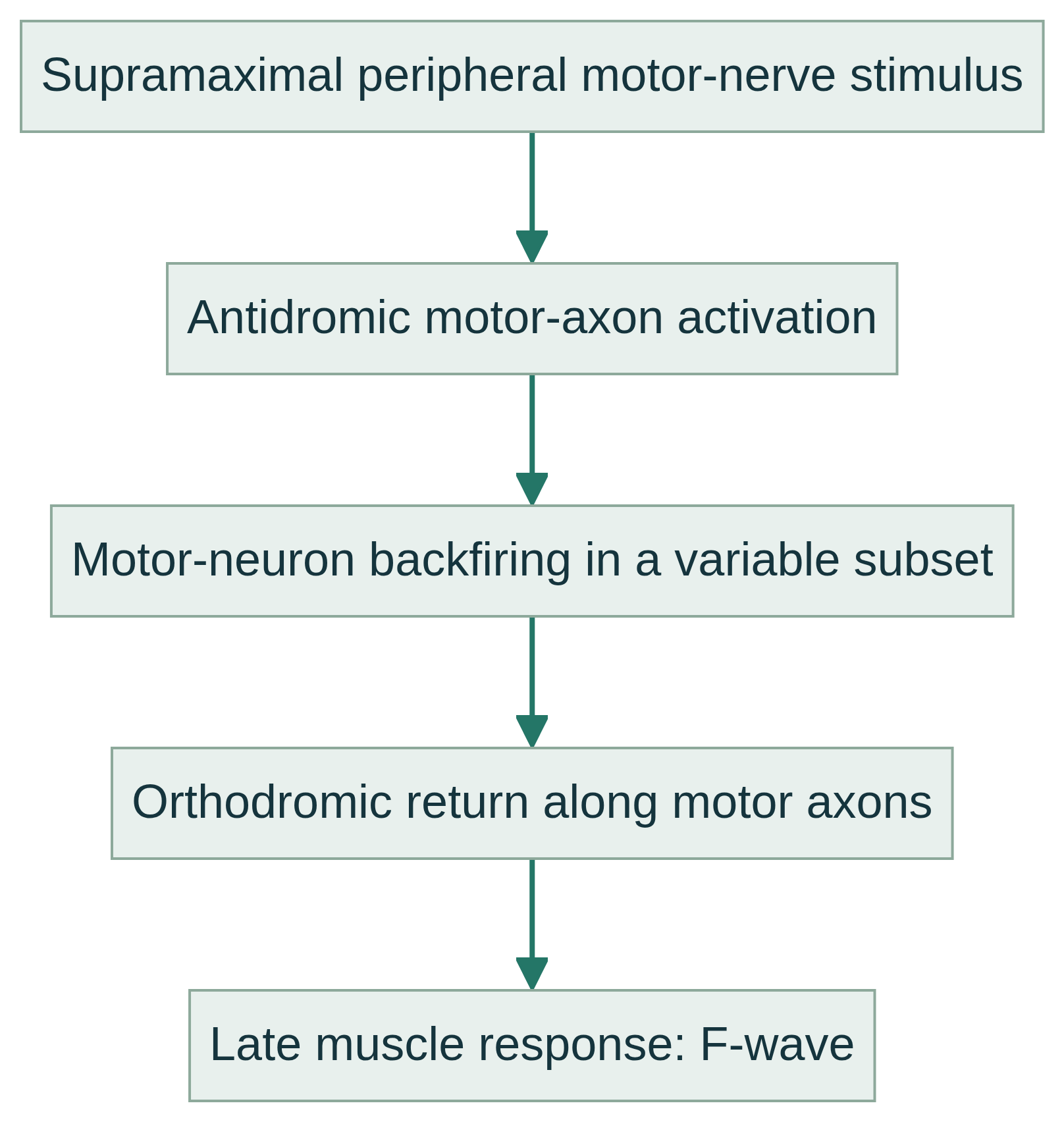
F-wave schematic: supramaximal stimulus, antidromic motor activation, variable motor-neuron backfiring, orthodromic return and late muscle response.
F-waves

F-wave studies

An F-wave study is a late motor response recorded during a nerve conduction study. It samples conduction along much of a motor nerve, including proximal segments that routine stimulation may not assess directly. Findings are interpreted with the clinical picture, not as a diagnosis.

Explore the study
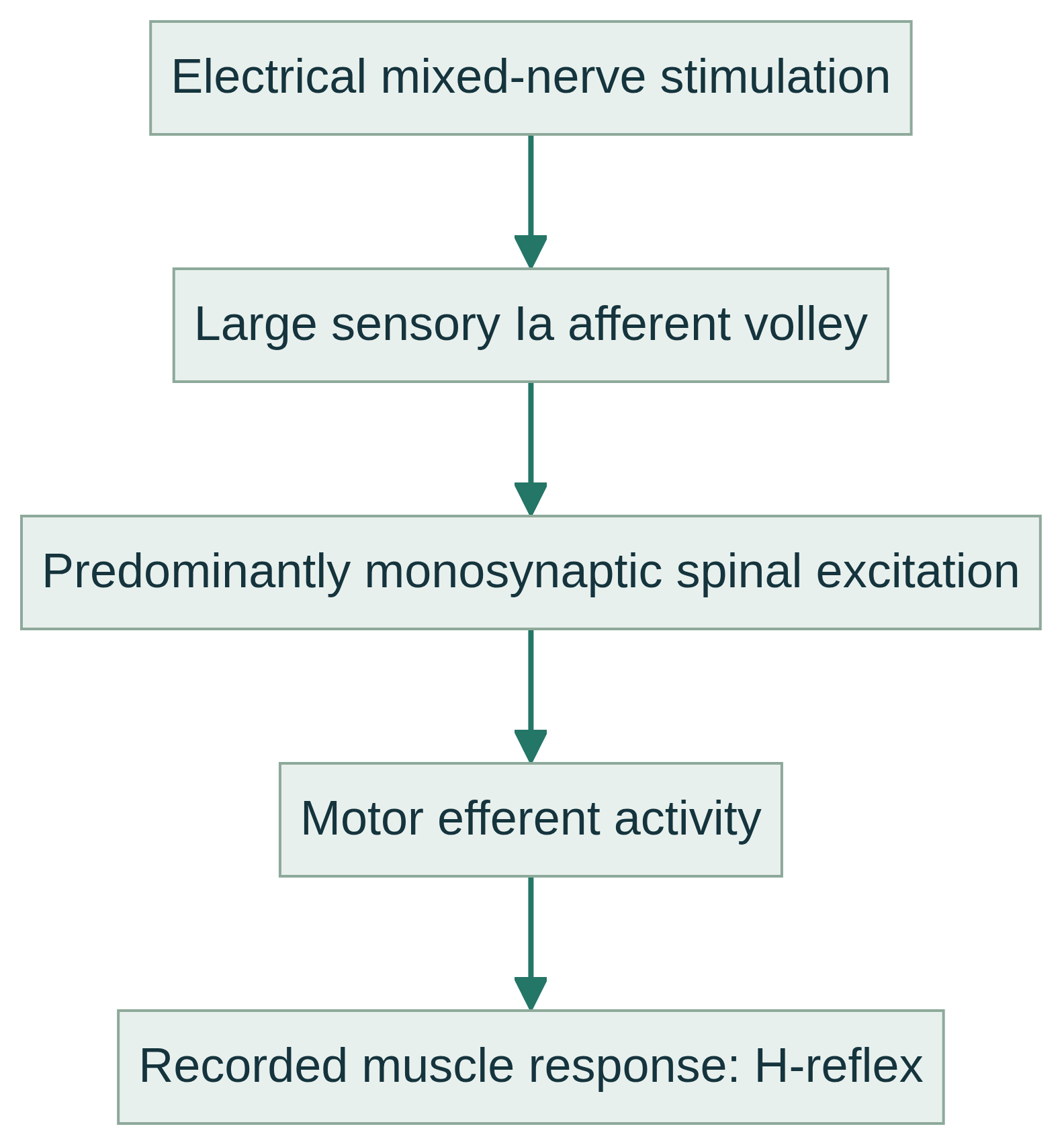
H-reflex schematic: mixed-nerve stimulation, sensory Ia afferents, predominantly monosynaptic spinal excitation, motor efferents and muscle response.
H-reflex

H-reflex studies

An H-reflex study records an electrically evoked late response that probes selected peripheral nerve, spinal, and motor pathways. It is a focused measurement whose meaning depends on technique, clinical context, and interpretation by an appropriately qualified licensed medical professional.

Explore the study
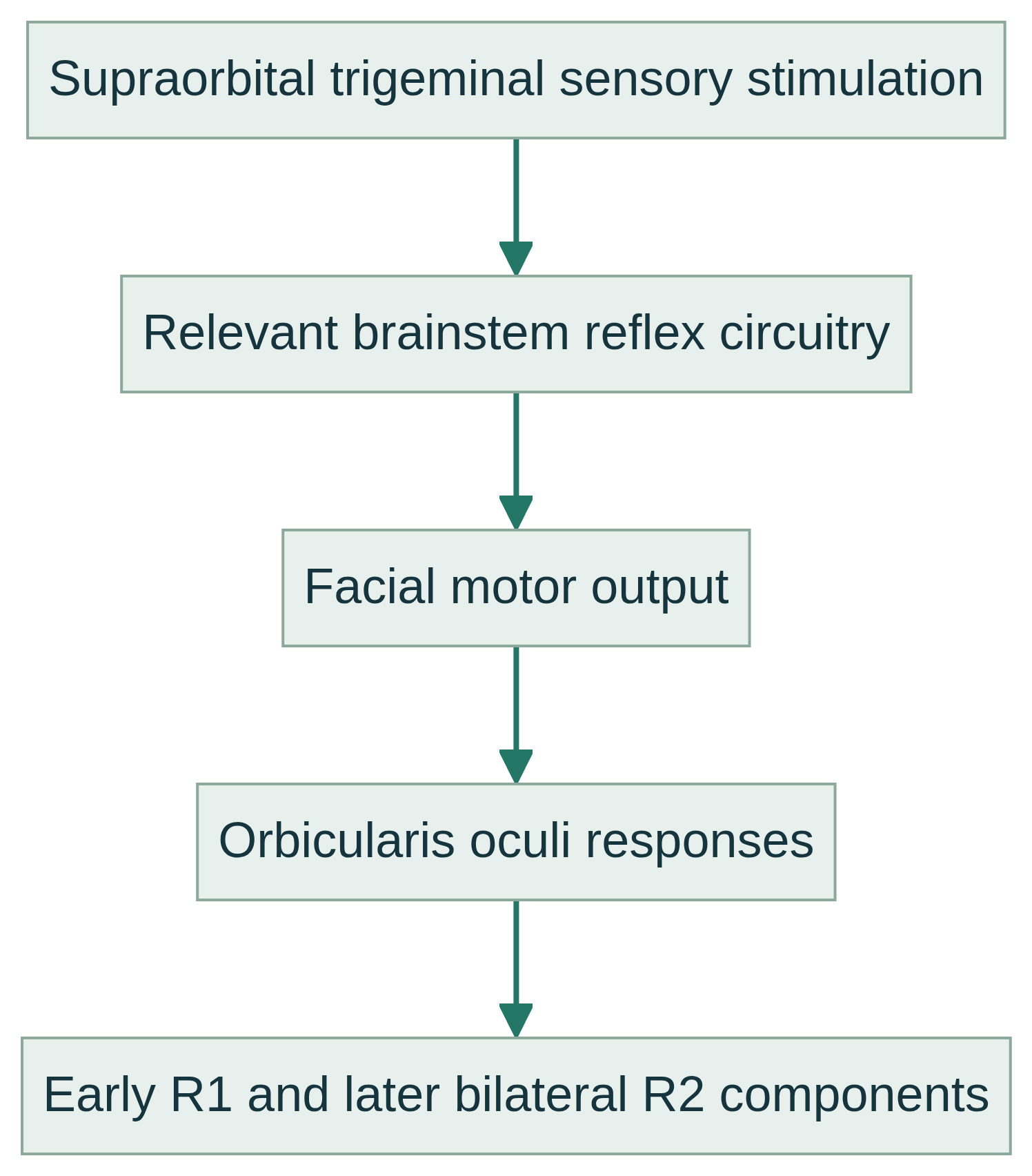
Blink reflex schematic: supraorbital trigeminal stimulation, brainstem circuitry, facial motor output, orbicularis oculi and R1/R2 responses.
Blink Reflex

Blink reflex testing

Blink reflex testing is a surface-recorded neurophysiologic study of pathways linking trigeminal sensory input, brainstem circuits, and facial motor output. It provides focused physiologic evidence, requiring clinical correlation and qualified medical interpretation.

Explore the study

Information, within appropriate scope.

Recorded physiologic data support broader clinical evaluation. Licensed medical interpretation, diagnosis and treatment are separate clinical responsibilities. Specific service availability, professional qualifications and arrangements must be verified.

Professional collaboration

Let’s begin a considered conversation.

Connect with Apex NeuroMetrics