
Stimulus–response physiology

Evoked potentials.

Objective recordings of neural responses to controlled sensory, visual and auditory stimulation.

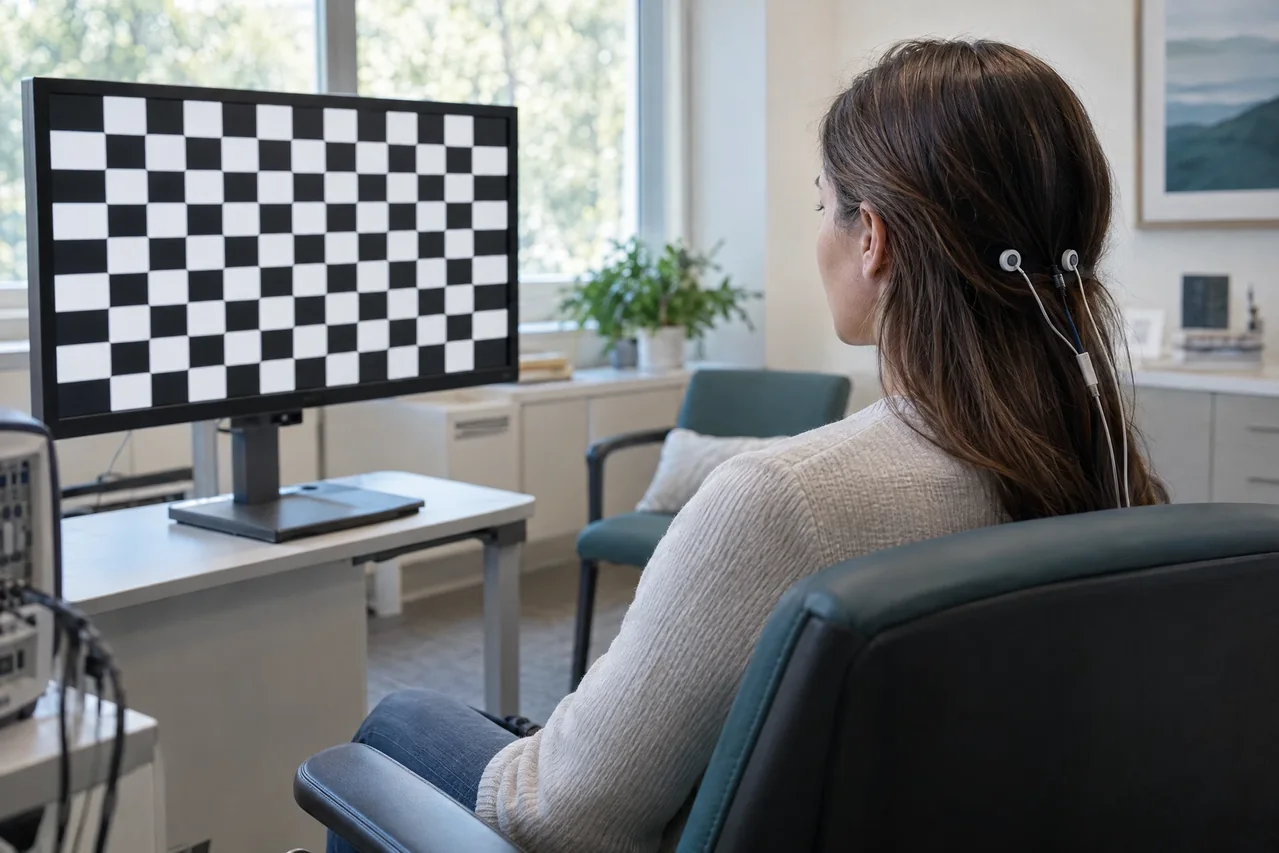
Illustrative visual evoked potential acquisition with checkerboard-pattern stimulation and occipital recording leads.
Visual evoked responses · Original AI-generated illustrative image

A response, traced with precision.

Evoked-potential methods record time-locked neural activity following a defined stimulus. Repeated trials and appropriate signal averaging help distinguish small evoked responses from background activity and artifact.

SSEP, VEP and BAER/ABR differ in their stimulation, recording montage, neural pathways and waveform interpretation. Response latency, morphology, reproducibility and—in appropriate contexts—amplitude provide complementary physiologic information, never a standalone diagnosis.

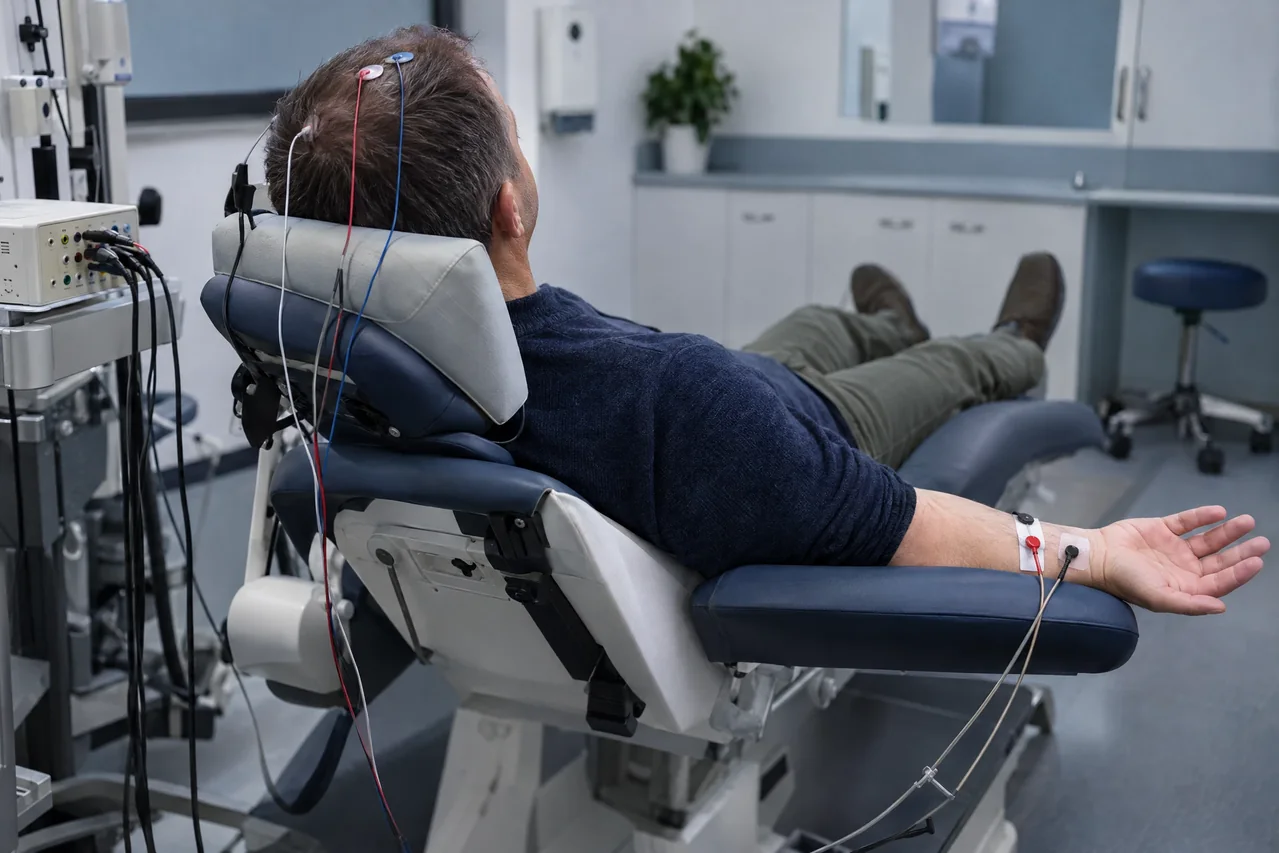
Illustrative somatosensory evoked potential setup with wrist stimulation and separate scalp recording electrodes.
SSEP

Somatosensory evoked potentials

Somatosensory evoked potentials (SSEPs) record the nervous system's electrical response after peripheral sensory-nerve stimulation. The study samples peripheral nerves, spinal pathways, subcortical structures, and sensory cortex; it is physiologic data, not a diagnosis by itself.

Explore the study
Illustrative visual evoked potential acquisition with checkerboard-pattern stimulation and occipital recording leads.
VEP

Visual evoked potentials

Visual evoked potentials (VEPs) are noninvasive recordings of brain responses to visual stimulation. They provide time-locked information about visual pathway function for qualified clinical interpretation; the recording itself is not a diagnosis.

Explore the study
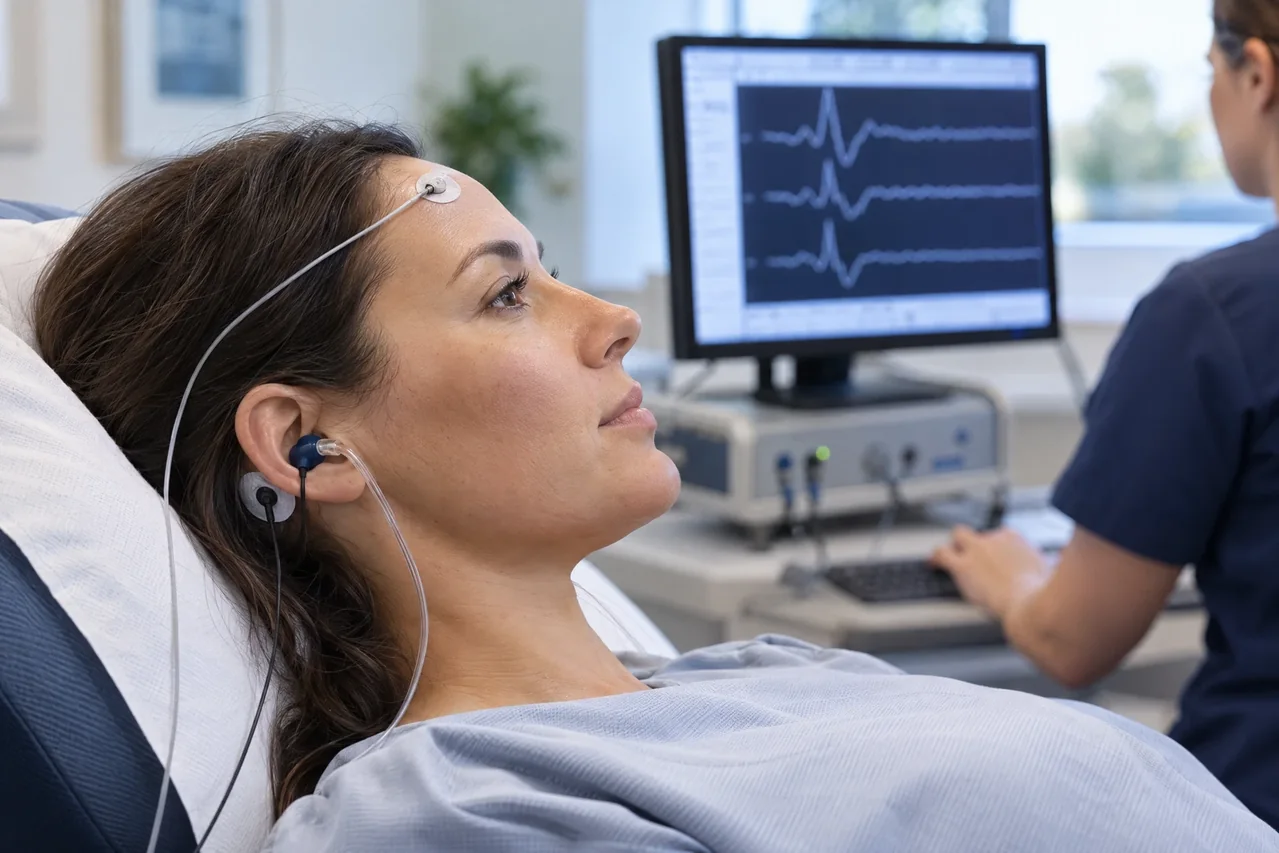
Illustrative auditory brainstem response acquisition using an insert earphone and forehead and mastoid surface electrodes.
ABR / BAER

Auditory brainstem responses

ABR, also called BAER, is a noninvasive evoked-potential study that records synchronized neural activity generated by sound. It provides objective information about auditory pathway function when behavioral responses are limited, while remaining one component of clinical assessment.

Explore the study

Information, within appropriate scope.

Recorded physiologic data support broader clinical evaluation. Licensed medical interpretation, diagnosis and treatment are separate clinical responsibilities. Specific service availability, professional qualifications and arrangements must be verified.

Professional collaboration

Let’s begin a considered conversation.

Connect with Apex NeuroMetrics